Latest News
Winter Crime Prevention Campaign
The Winter Crime Prevention Campaign aims to raise awareness and provide tips to keep our community safe during the winter months.

September edition of Castlethorpe News now available online
The September edition of Castlethorpe News is now available online. You can find the latest updates and community news here.
New PCSO in Castlethorpe
PCSO Lesley Rogers has replaced PCSO Jo Clarke. She can be contacted at lesley.rogers@thamesvalley.police.uk She will walk around Castlethorpe regularly so please say hello.
News from The Lounge
Winter Opening Hours published Read More



New Membership Cards
Members of Castlethorpe Community Space CIC can now collect their new membership cards directly from The Lounge.
Proposed New Town based around Haversham
As part of the Government New Towns Proposal, Milton Keynes is one of the designated sites and an area identified around Haversham, running just into Castlethorpe by the Dips and up and around Hanslope Park. It is planned to include up to 21,500 new homes and potentially a new motorway junction at Tathall End. Apart from the ecological - it will cross the Wetlands Arc of the Ouse Valley, and environmental impacts - a new bridge across the Ouse Valley will have to be constructed, and the cost which may well be paid by creating a warehousing facility near the potential new J14a at Tathall End, this amount of housing will take at least 10 years to construct (MK currently builds less than 2,000 houses a year) causing disruption on our main access to Milton Keynes.
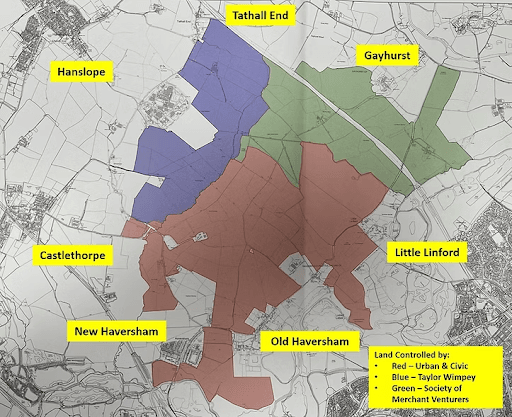
The Government consultation has now ended and thank you to everyone who responded. Our City Councillor, Alison Andrew, proposed a motion at MKCC to ask the government to remove the northern part of the New Town plan around Haversham from its New Town Plans. However, the Liberal-Democrate and Labour Administration defeated the motion. Our MP, Chris Curtis, has held an Open Forum, jointly organised with Alison, so that he could answer questions on the New Town. It was well attended. Chris expressed his doubt about the location and said he needed to be satisfied that five tests had been met: (1) Infrastructure is built before homes (2) that nature is enhanced (3) that genuinely affordable homes are built (4) that green spaces are a part of any designs proposed and (5) that flood mitigation concerns are addressed and, where possible, that development infrastructure actually improves flood defences. At the moment, Chris does not feel these tests are met and he cannot currently give the scheme his support but he will remain engaged with all parties. He also stressed that this is not imminent, not least because of the likely unavailability of government funding for the infrastructure, and that any scheme would have to go through the Planning process which requires compliance with MKCC planning policies.